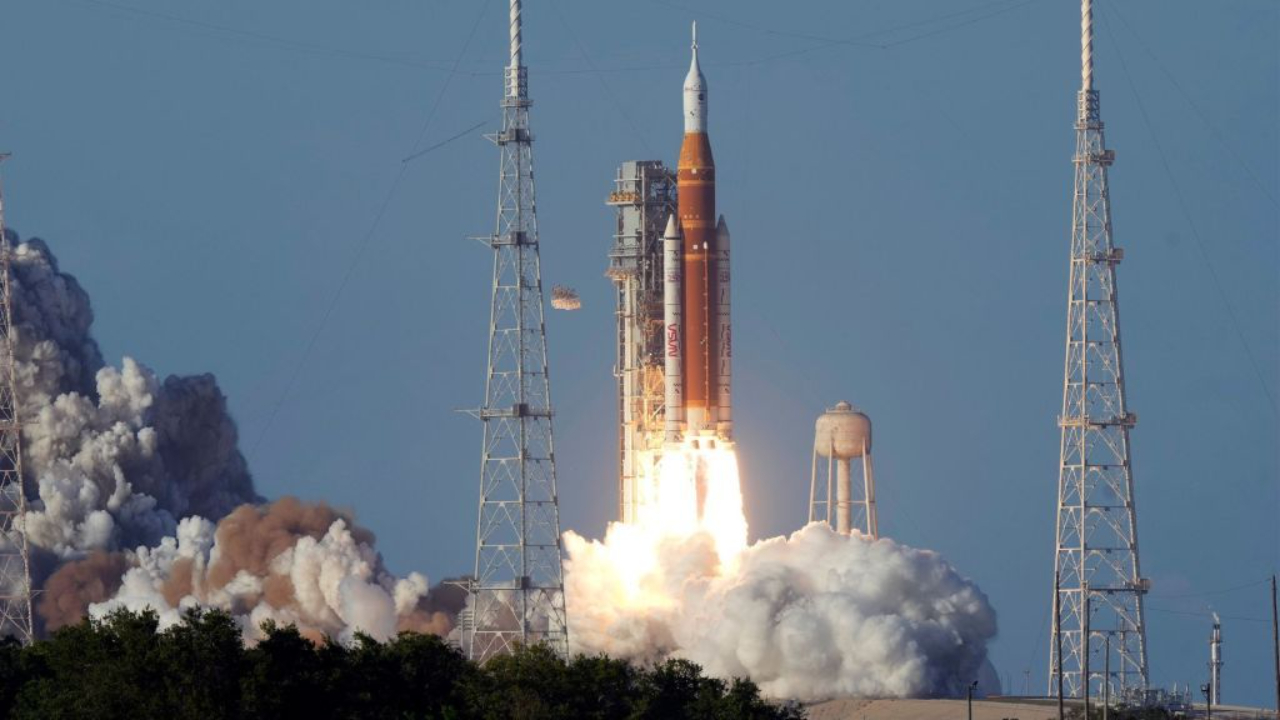
The successful launch of Artemis II marks a defining moment in modern space exploration—one that not only signals America’s return to deep space but also highlights the powerful role Texas continues to play in shaping the future of human spaceflight.
A Historic Return to the Moon
on April 1, 2026, NASA launched Artemis II from Kennedy Space Center in Florida, sending four astronauts on a 10-day mission around the Moon. This mission is historic for several reasons:
It is the first crewed mission beyond low Earth orbit in over 50 years, since the Apollo era
It uses NASA’s powerful Space Launch System (SLS) rocket and the advanced Orion spacecraft
The crew includes:
Reid Wiseman (Commander)
Victor Glover (Pilot)
Christina Koch (Mission Specialist)
Jeremy Hansen (Canadian Space Agency)
Unlike the Apollo missions, Artemis II will not land on the Moon. Instead, it will orbit the Moon and return to Earth, testing critical systems needed for future lunar landings.
This mission is a stepping stone toward Artemis III, which aims to land astronauts on the lunar surface later this decade.
What Artemis II Is Really Testing
Artemis II is more than just a symbolic return—it’s a full-scale systems test in deep space. During the mission, NASA is evaluating:
Life support systems for long-duration space travel
Deep space navigation and communication
Heat shield performance during high-speed reentry
Crew operations in a confined spacecraft environment
The mission follows a “free-return trajectory,” looping around the Moon and naturally returning to Earth without requiring additional propulsion—an important safety feature proven during Apollo missions.
Texas: The Heart of Mission Control
While the rocket launched in Florida, the brain of the mission is in Texas.
Johnson Space Center – Houston
NASA’s Johnson Space Center (JSC) in Houston plays a central role in Artemis II:
Mission Control operations are based in Houston
Astronaut training for Artemis missions takes place here
Engineers and scientists monitor spacecraft systems in real time
Houston’s legacy as “Space City” continues, reinforcing the famous phrase: “Houston, we have a problem.”
NASA has actively showcased Artemis II across Texas, including public events and outreach tied to Houston’s culture and sports, further connecting Texans to the mission.
Texas Workforce and Innovation
Texas isn’t just hosting Mission Control—it’s helping build the future of space exploration.
Across the state:
Universities like Texas A&M, UT Austin, and Rice University contribute research and workforce development
Aerospace companies and contractors support engineering, manufacturing, and technology
Thousands of Texans are directly involved in Artemis-related work
Texas has become a major hub in the growing space economy, contributing talent and innovation to NASA’s long-term goals.
Why Artemis II Matters for the Future
Artemis II is not just about going back to the Moon—it’s about what comes next:
Establishing a long-term human presence on the Moon
Building infrastructure like lunar bases
Preparing for future missions to Mars
NASA views Artemis as the foundation for a new era of exploration, much like Apollo was in the 1960s—but with broader international collaboration and long-term goals.
A Texas-Sized Role in a Global Mission
For Texans, Artemis II is more than a distant launch—it’s a local achievement with global impact.
From Houston’s Mission Control to universities and aerospace companies across the state, Texas is deeply embedded in every phase of the mission. As humanity pushes farther into space, Texas remains at the center of it all.
Final Thoughts
Artemis II represents a powerful combination of history and future:
A return to deep space after decades
A test mission that paves the way for lunar landings
A reminder that Texas continues to lead in space exploration
As the Orion spacecraft travels around the Moon, one thing is clear: the road back to the Moon—and eventually Mars—runs straight through Texas.
Stay connected with news and updates!
Join our newsletter to receive the latest news and updates from our team. Don't worry, your information will not be shared.